
Low-impact exercise has an image problem. Most people associate it with rehabilitation, with older adults, or with people who are not yet fit enough for real training. The assumption is that if your feet are not pounding the pavement and your heart is not hammering at maximum capacity, you are not working hard enough to produce meaningful fitness adaptations. That assumption is wrong, and it keeps a significant number of people away from some of the most effective and most sustainable forms of exercise available. Low-impact does not mean low-intensity. It means the exercise produces minimal impact force on the joints, typically defined as activities where at least one foot remains in contact with the ground or a surface at all times, or where the body is supported by water or equipment. Within that definition, you will find workouts that challenge cardiovascular capacity, muscular endurance, strength, coordination, and flexibility in ways that surprise almost every person who tries them seriously for the first time.
The ten workouts below are ranked by the gap between how easy they look and how hard they actually are, starting with the ones that most consistently shock beginners with their difficulty. Each one includes the primary fitness components it develops, the calorie burn range for a 155-pound adult at moderate effort, and specific notes on what makes it harder than it appears.
1. Rowing
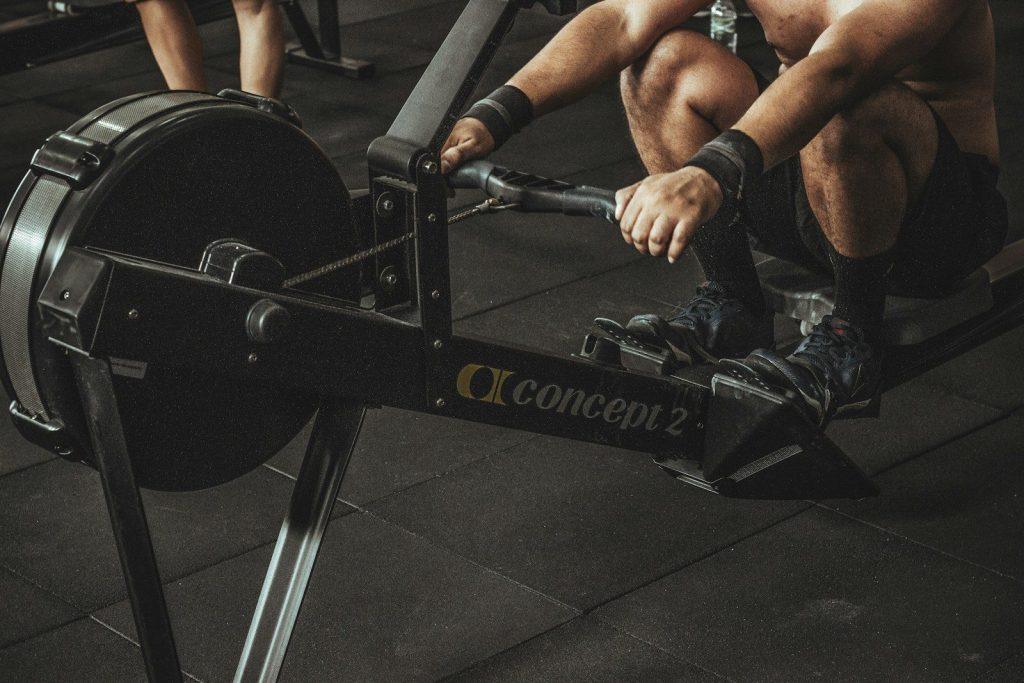
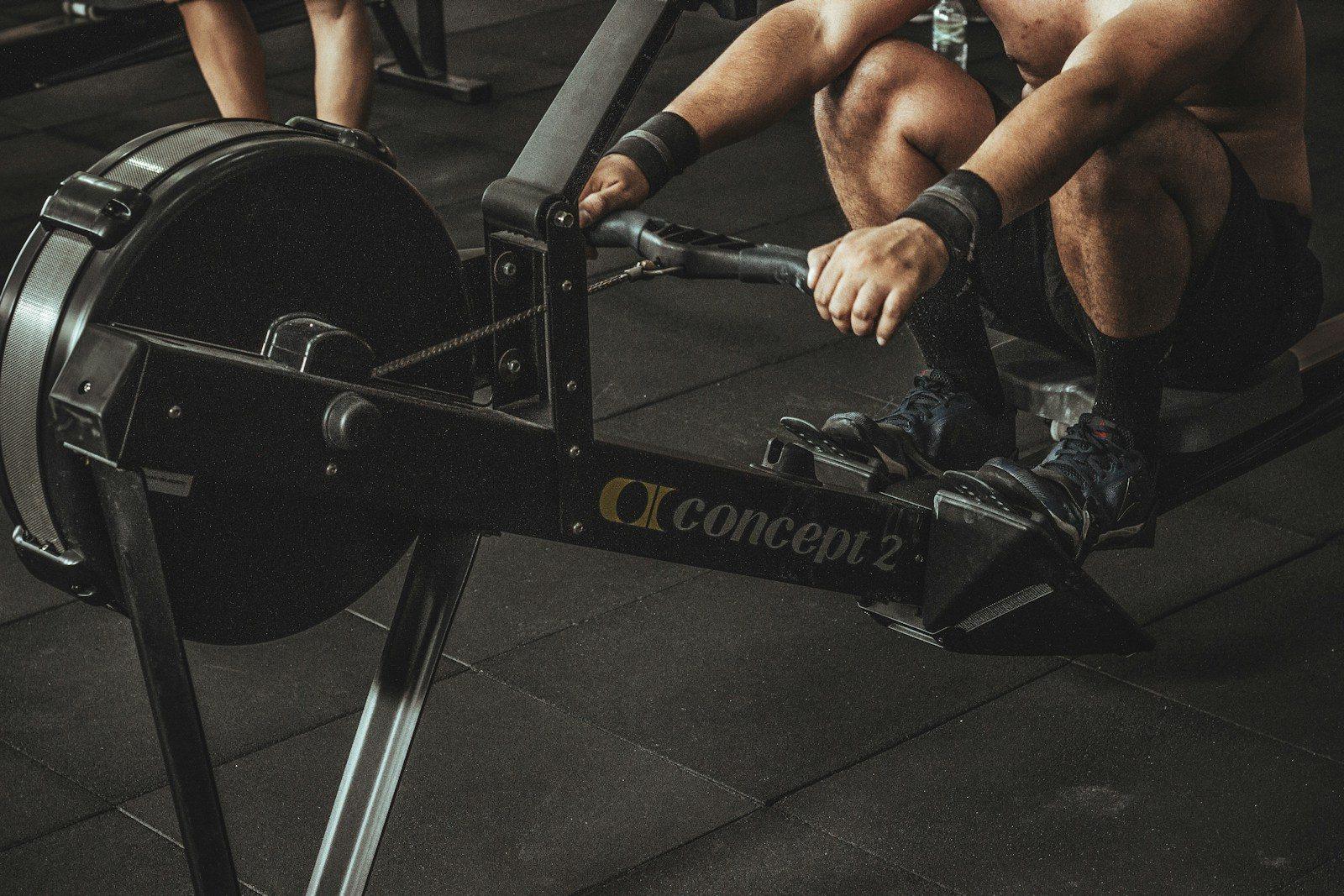
Rowing is the most complete low-impact workout on this list and the one that produces the widest gap between expectation and reality for beginners. A person who sits down at a rowing machine for the first time and pulls hard for ten minutes without prior instruction typically finishes breathless, with burning legs, a fatigued back, and a genuine surprise at how demanding a seated exercise can be.
The reason is that rowing engages approximately 86 percent of the body’s muscle mass in a single coordinated movement. The drive phase of each stroke begins with leg extension, which accounts for roughly 60 percent of the power output, transitions through trunk extension, and finishes with arm pull. The recovery phase reverses that sequence. Done correctly at a moderate pace, rowing elevates heart rate into Zone 2 within two to three minutes and keeps it there for the duration of the session. Done at high effort, it is one of the most metabolically demanding activities available on any piece of exercise equipment.
A 155-pound person burns approximately 260 to 310 calories per 30 minutes of moderate-effort rowing, comparable to running at a moderate pace, with a fraction of the joint impact. Research published in the Journal of Strength and Conditioning Research found that rowing at moderate intensity produced significant improvements in VO2 max, muscular endurance, and lower body power in previously sedentary adults over an eight-week program. The technique learning curve is real but short. Most people develop adequate rowing form within two to three sessions with basic instruction.
2. Swimming
Swimming is the purest expression of the low-impact principle because the water supports the body’s weight almost entirely, removing impact force from the equation while preserving and in many cases amplifying the cardiovascular and muscular demands of the movement. A person who can run a 10-minute mile comfortably will typically find that swimming a single 25-meter lap at a brisk pace leaves them more breathless than expected, because the breathing pattern swimming demands is fundamentally different from any land-based exercise.
The cardiovascular demand of swimming comes from three sources simultaneously: the full-body muscular effort of propelling through water resistance, the forced breath control that prevents water inhalation, and the horizontal body position that requires the heart to work differently than it does in upright exercise. These three factors combine to produce heart rate elevations that rival running at equivalent perceived effort levels.
A 155-pound person burns approximately 270 to 330 calories per 30 minutes of moderate freestyle swimming. Different strokes produce different demands, with butterfly being the most metabolically costly and backstroke the least among the competitive strokes. Breaststroke is the most accessible for beginners and still produces a meaningful cardiovascular stimulus when performed at a consistent pace. Research from Indiana University’s Department of Kinesiology found that recreational swimmers had biological aging markers, including blood pressure, cholesterol levels, and cardiovascular function, that were comparable to people ten to twenty years younger than their chronological age.
3. Cycling
Stationary and outdoor cycling both qualify as low-impact exercise and both carry a reputation for being easier than they are, particularly among people who have not experienced a properly structured cycling session at meaningful intensity. A 45-minute spin class at moderate to high effort is cardiovascularly comparable to a 5K run for most participants, and a 60-minute outdoor ride with meaningful elevation produces muscular fatigue in the quadriceps, hamstrings, and glutes that persists for 24 to 48 hours afterward.
The low-impact nature of cycling makes it particularly valuable for people with knee osteoarthritis, hip pain, or lower back conditions that make running or high-impact exercise painful or contraindicated. The circular pedaling motion lubricates the knee joint through movement without compression, which research published in Arthritis Care and Research found to be associated with reduced knee pain and improved function in adults with mild to moderate osteoarthritis over a 12-week cycling program.
A 155-pound person burns approximately 250 to 350 calories per 30 minutes of moderate cycling, with significant variation based on resistance level, cadence, and terrain.
4. Pilates
Pilates sits at the intersection of strength training and movement quality work in a way that makes it almost universally underestimated by people who have never attended a serious class. The absence of heavy weights and the controlled, deliberate pace of movement lead many people to assume that Pilates is gentle stretching with branding. A first intermediate Pilates session corrects that assumption quickly.
The core demand of Pilates is its defining and most demanding feature. Every exercise in the classical Pilates repertoire requires sustained activation of the deep core musculature, including the transverse abdominis, multifidus, and pelvic floor, throughout the movement. Maintaining that deep core engagement while simultaneously controlling the movement of the limbs in slow, precise patterns requires neuromuscular coordination that most people do not possess at the level Pilates demands, which is why beginners frequently shake, lose alignment, and fatigue faster than they expect.
Research published in the Journal of Bodywork and Movement Therapies found that twelve weeks of Pilates training produced significant improvements in core endurance, flexibility, dynamic balance, and lumbar stabilization in healthy adults. The same study found measurable reductions in chronic lower back pain in participants who reported it at baseline. A 155-pound person burns approximately 170 to 240 calories per 45-minute Pilates session, lower than the cardiovascular options above but paired with strength and mobility adaptations those options do not produce.
5. Elliptical Training
The elliptical machine is one of the most commonly used pieces of gym equipment and one of the most consistently undertrained on. Most people use it at a resistance level and pace that keeps them comfortably in Zone 1, which produces minimal cardiovascular or muscular adaptation. The elliptical at genuine effort, with resistance high enough to require meaningful push-pull engagement of both arms and legs and at a pace that elevates heart rate into Zone 2 or Zone 3, is a full-body cardiovascular workout that produces zero impact on the joints and significant metabolic demand.
The arm engagement of the elliptical is what distinguishes it from a treadmill and what most users underutilize. Actively pushing and pulling the handles rather than resting hands lightly on them increases upper body muscle recruitment substantially and elevates caloric expenditure by approximately 10 to 15 percent compared to legs-only use. A 155-pound person burns approximately 270 to 320 calories per 30 minutes of moderate-to-vigorous elliptical training with full arm engagement.
6. Yoga
Yoga’s reputation as gentle stretching does not survive contact with an intermediate vinyasa or ashtanga class. The sustained isometric holds, the slow controlled transitions between poses, and the bodyweight loading in positions like plank, chaturanga, warrior III, and crow pose produce muscular fatigue that is comparable to resistance training in the muscles being loaded. The difference is that yoga loads muscles in lengthened positions under sustained tension rather than through the concentric-eccentric cycles of traditional strength training, which produces a distinct type of muscular adaptation.
Research published in the International Journal of Yoga found that twelve weeks of regular yoga practice produced significant improvements in upper body strength, lower body strength, flexibility, and balance in previously sedentary adults, with effect sizes comparable to those produced by resistance training programs of similar duration. The cardiovascular demand of yoga varies enormously by style. Yin yoga produces minimal cardiovascular stimulus. Vinyasa yoga at a continuous flow pace elevates heart rate into Zone 2 for many practitioners, producing aerobic adaptations alongside the strength and mobility benefits.
7. Kayaking and Stand-Up Paddleboarding
Water-based activities produce the same joint-friendly low-impact profile as swimming while adding the balance, coordination, and outdoor environment components that pool-based exercise cannot provide. Kayaking at a moderate paddling pace engages the core, shoulders, upper back, and arms in a rotational pattern that produces significant muscular fatigue in the obliques and latissimus dorsi after 30 to 45 minutes of continuous effort. The core demand is the element that most surprises beginners, who focus on the arm movement and do not anticipate how hard the torso works to stabilize and generate rotational power.
Stand-up paddleboarding (SUP) adds a balance challenge that kayaking does not have, requiring continuous activation of the ankle stabilizers, tibialis anterior, and deep core muscles simply to remain upright on the board. A 155-pound person burns approximately 230 to 280 calories per hour of moderate kayaking and 300 to 430 calories per hour of SUP, with the caloric range depending significantly on conditions, pace, and the individual’s balance skill level.
8. Dance-Based Workouts
Dance-based formats including Zumba, barre, and structured dance fitness classes produce cardiovascular and coordination demands that their cheerful aesthetic consistently causes people to underestimate. A 60-minute Zumba class at full participation elevates heart rate into Zone 2 to Zone 3 for the majority of the session and burns between 300 and 500 calories for a 155-pound person depending on intensity and individual effort.
The coordination demand of dance-based exercise is its distinctive feature. Learning and executing movement sequences while tracking music tempo and spatial awareness in relation to other participants recruits cognitive resources alongside physical ones, producing a dual-task challenge that research in Frontiers in Aging Neuroscience found to be associated with significant improvements in processing speed, attention, and spatial memory in older adults over a 26-week dance exercise program.
9. Tai Chi
Tai chi appears, from the outside, to be slow movement performed in a park by older adults. This appearance is accurate and completely misleading about the demands of the practice at an intermediate or advanced level. The sustained single-leg weight shifts, the deep stances held through slow continuous movement, the precise arm and hand positioning, and the requirement for simultaneous relaxation and structural alignment throughout every form produce a neuromuscular demand that most adults significantly underestimate until they attempt it.
Research published in the British Journal of Sports Medicine found that tai chi practice produced significant improvements in balance, proprioception, lower body strength, and cardiovascular fitness in older adults, with a fall reduction rate of 20 to 38 percent across multiple controlled trials. The cognitive engagement required to learn and sequence the tai chi forms produces simultaneous neurological benefits that purely physical exercises do not match.
10. Hiking
Hiking occupies an interesting position in the low-impact category because terrain and elevation determine whether it qualifies as moderate or vigorous exercise far more than pace does. A flat trail walk is gentle exercise. A trail with sustained elevation gain of 500 feet per mile elevates heart rate into Zone 3 for most adults, loads the quadriceps and glutes as heavily as a resistance training session, and burns between 350 and 500 calories per hour for a 155-pound person carrying a daypack.
The psychological and physiological benefits of hiking extend beyond the cardiovascular and muscular demands. Research from Stanford University found that 90 minutes of walking in a natural environment reduced activity in the subgenual prefrontal cortex, the brain region associated with rumination and self-referential negative thought, compared to the same duration of urban walking. Nature-based exercise produces stress reduction benefits that indoor exercise does not replicate, making hiking an exercise modality with a uniquely broad range of health benefits relative to its impact on the joints.
Every item on this list is more demanding than it looks, and every one is sustainable in a way that high-impact training is not for a significant proportion of adults. The home workout 4-week plan provides a complementary bodyweight strength foundation that pairs effectively with any of these low-impact cardio modalities, producing a combined program that develops cardiovascular fitness, muscular strength, and movement quality simultaneously without requiring a gym membership or equipment beyond what most people already have access to.
Leave a Reply