
There is a fundamental mismatch between how most people engage with the healthcare system and when that engagement is most effective. Most adults see a doctor when something hurts, when a symptom has persisted long enough to become alarming, or when a condition has progressed far enough to interfere with daily function. By that point, the disease has already had months or years to develop without opposition. Preventive health screenings exist to close that gap, to find conditions at the stage where intervention is least costly, most effective, and most likely to preserve both quality and length of life. The screenings below are not obscure or experimental. They are supported by some of the strongest evidence in clinical medicine, recommended by major health organizations, and skipped by a significant proportion of the adults who would benefit most from them. Each one is worth understanding in specific terms, because generic advice to get your checkups does not tell you what you are actually being screened for, why it matters, and what happens when you find it early versus late.
1. Colorectal Cancer Screening
Colorectal cancer is the second leading cause of cancer death in the United States according to the American Cancer Society, and it is among the most preventable of all cancers because its precursor lesions, called adenomatous polyps, are visible and removable before they become malignant. Colonoscopy does not merely detect colorectal cancer early. It prevents it by identifying and removing polyps during the same procedure.
The United States Preventive Services Task Force recommends screening beginning at age 45 for average-risk adults, a recommendation updated in 2021 from the previous age 50 threshold in response to rising incidence rates in younger adults. Colonoscopy is recommended every ten years when results are normal. Less invasive options including stool DNA tests and fecal immunochemical tests (FIT) are available annually for people who decline colonoscopy, though a positive result on either requires follow-up colonoscopy.
The survival data makes the case for screening more powerfully than any general argument. Colorectal cancer caught at stage one has a five-year survival rate above 90 percent. Caught at stage four, that figure drops below 15 percent. The difference is almost entirely determined by whether a screening found it before symptoms appeared, because colorectal cancer produces no reliable symptoms in its early and most treatable stages.
2. Blood Pressure Screening
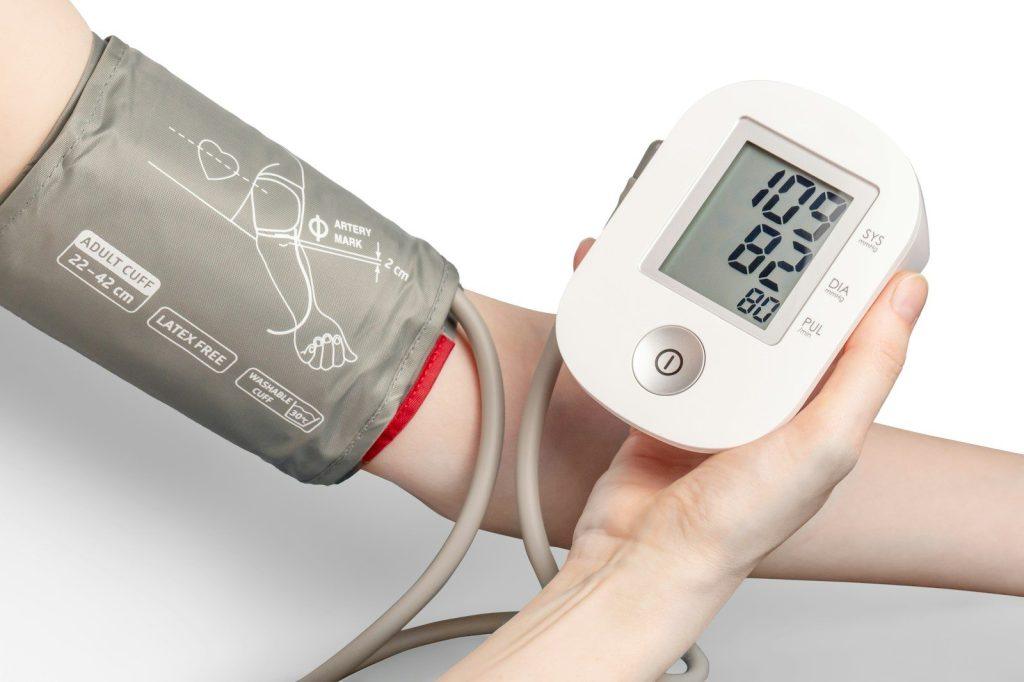
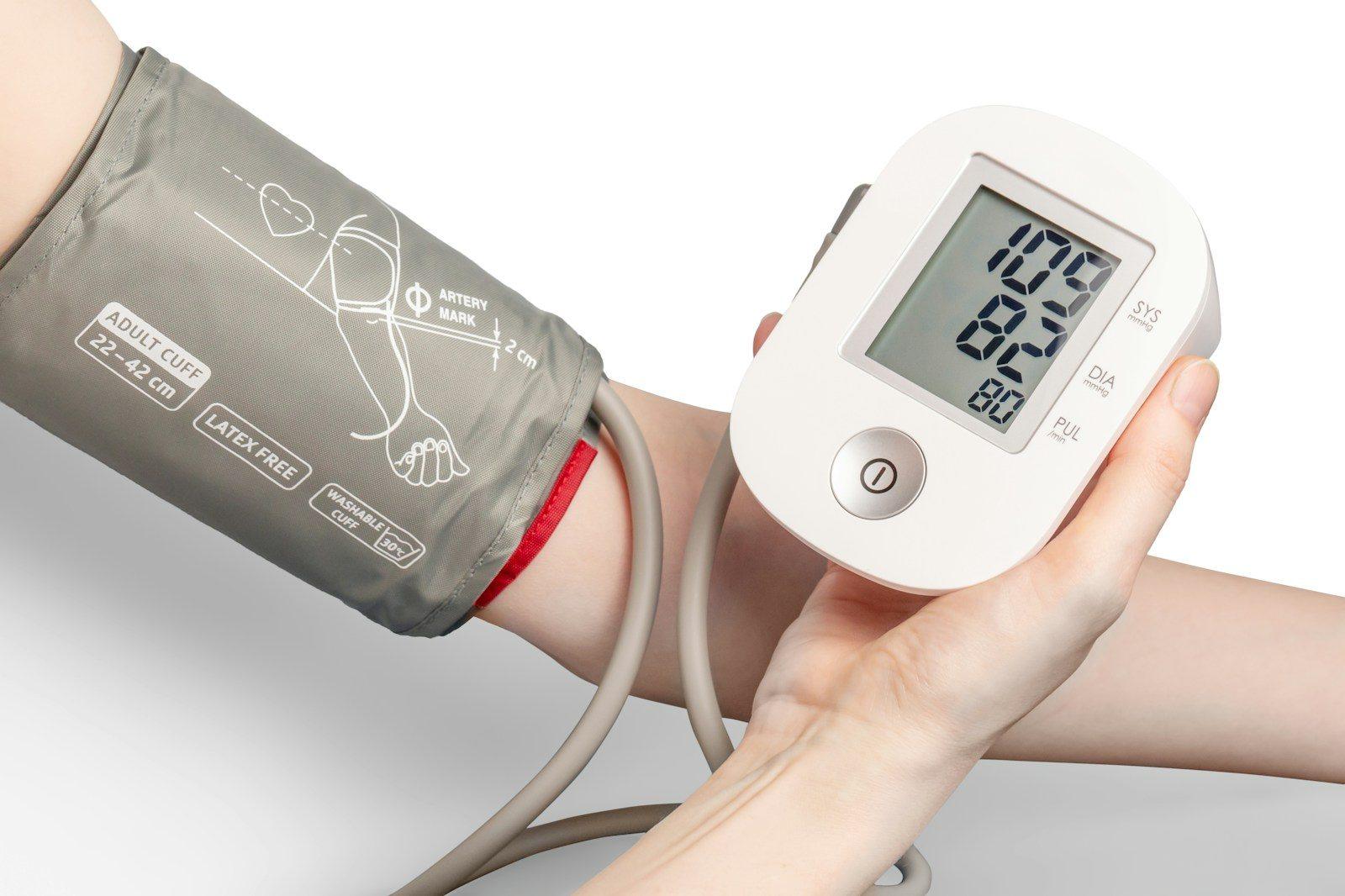
Hypertension affects approximately 47 percent of American adults according to American Heart Association data, and roughly one in five people with high blood pressure are unaware they have it. The absence of symptoms is the defining clinical challenge of hypertension. Blood pressure elevation produces no pain, no visible signs, and no functional impairment until it has caused sufficient damage to the heart, kidneys, blood vessels, or brain to produce a serious event. Stroke, heart attack, heart failure, and kidney disease are all downstream consequences of unmanaged hypertension that can be prevented or significantly delayed by identifying and treating elevated blood pressure before organ damage accumulates.
The United States Preventive Services Task Force recommends blood pressure screening at every clinical encounter for adults 18 and older. Home blood pressure monitoring has been shown in multiple trials to improve blood pressure control beyond what clinic measurements alone achieve, because a single clinic reading does not capture the full range of a person’s blood pressure across different contexts and times of day. A validated home monitor and a log of readings taken at consistent times provides far more actionable data than an annual clinic measurement.
3. Cervical Cancer Screening
Cervical cancer is one of the most preventable cancers in existence because its primary cause, persistent infection with high-risk strains of human papillomavirus (HPV), is detectable years before cancer develops and the precancerous changes it produces are visible and treatable during routine screening. Research from the National Cancer Institute has documented a greater than 70 percent reduction in cervical cancer incidence and mortality in countries with established Pap smear screening programs compared to unscreened populations, making cervical cancer screening one of the most successful public health interventions in modern medicine.
Current guidelines from the American College of Obstetricians and Gynecologists recommend a Pap smear every three years for women aged 21 to 29, and either a Pap smear every three years, an HPV test every five years, or both tests together every five years for women aged 30 to 65. Screening can stop after 65 for women with adequate prior screening history and no high-risk factors. The HPV vaccine significantly reduces the risk of developing the high-risk HPV strains responsible for most cervical cancers and does not replace screening for people who are already sexually active when they receive it.
4. Lung Cancer Screening
Lung cancer is the leading cause of cancer death in the United States, responsible for more deaths annually than colorectal, breast, and prostate cancer combined according to the American Lung Association. It carries such high mortality primarily because it is almost always diagnosed at an advanced stage when curative treatment is no longer possible. The reason for late diagnosis is the same as hypertension: early-stage lung cancer produces no symptoms.
Low-dose computed tomography (LDCT) screening has changed the lung cancer prognosis picture significantly for people at high risk. The National Lung Screening Trial, a large randomized controlled trial funded by the National Cancer Institute, found that annual LDCT screening reduced lung cancer mortality by 20 percent in high-risk participants compared to chest X-ray screening. A subsequent European trial called NELSON found a 24 percent reduction in lung cancer mortality in men and an even larger reduction in women over a ten-year follow-up period.
The United States Preventive Services Task Force recommends annual LDCT screening for adults aged 50 to 80 who have a 20 pack-year smoking history and currently smoke or have quit within the past 15 years. This population represents the group at highest risk where the screening benefit is most clearly established. Screening is conducted at designated lung cancer screening centers that use standardized protocols and have radiologists experienced in interpreting LDCT results.
5. Diabetes Screening
Type 2 diabetes affects approximately 37 million Americans according to the Centers for Disease Control and Prevention, and an estimated 96 million American adults have prediabetes, a state of elevated blood glucose that has not yet crossed the diagnostic threshold for diabetes but carries significant cardiovascular and metabolic risk and progresses to type 2 diabetes in a substantial proportion of people without intervention. Approximately 80 percent of people with prediabetes are unaware they have it.
The importance of early detection lies in the window of reversibility. Prediabetes and early type 2 diabetes are responsive to lifestyle interventions including dietary changes and increased physical activity in ways that established diabetes with significant insulin resistance is not. Research from the Diabetes Prevention Program, a landmark randomized controlled trial conducted across 27 clinical centers in the United States, found that lifestyle intervention reduced progression from prediabetes to type 2 diabetes by 58 percent over three years, outperforming metformin, the standard pharmaceutical intervention, in the same population.
The United States Preventive Services Task Force recommends screening for prediabetes and type 2 diabetes in adults aged 35 to 70 who are overweight or obese, using fasting blood glucose, a hemoglobin A1c test, or an oral glucose tolerance test. The fasting blood glucose and A1c tests are simple blood draws available at any clinical laboratory and typically covered by insurance as part of routine preventive care.
6. Bone Density Screening
Osteoporosis affects approximately 10 million Americans, with an additional 44 million having low bone density that places them at elevated fracture risk according to the National Osteoporosis Foundation. Hip fractures in older adults carry consequences that extend far beyond the fracture itself. Approximately 25 percent of adults over 50 who sustain a hip fracture die within one year of the fracture, and a significant proportion of survivors never regain their prior level of independent function.
The defining feature of osteoporosis that makes screening valuable is that bone loss is entirely asymptomatic until a fracture occurs. There are no warning symptoms, no pain, and no functional changes that signal declining bone density. A dual-energy X-ray absorptiometry (DEXA) scan, which takes approximately ten to fifteen minutes and exposes the patient to radiation equivalent to a few hours of normal background exposure, measures bone mineral density at the hip and lumbar spine and produces a T-score that quantifies fracture risk with sufficient precision to guide treatment decisions.
The United States Preventive Services Task Force recommends DEXA screening for all women aged 65 and older and for postmenopausal women under 65 whose fracture risk is equal to or greater than that of a 65-year-old white woman with no additional risk factors. Men over 70 with risk factors including low body weight, smoking history, excessive alcohol use, or long-term corticosteroid use benefit from screening as well. Medications that significantly reduce fracture risk are available and effective when prescribed based on identified bone density loss, making early detection a direct path to meaningful risk reduction.
7. Skin Cancer Screening
Skin cancer is the most commonly diagnosed cancer in the United States, with more cases diagnosed annually than all other cancers combined according to the Skin Cancer Foundation. The majority of skin cancers are basal cell and squamous cell carcinomas, which are highly treatable when caught early and rarely life-threatening. Melanoma, the least common but most dangerous form, is responsible for the majority of skin cancer deaths and is the one where the early versus late detection difference is most dramatic.
Melanoma caught at stage one, confined to the skin, has a five-year survival rate above 98 percent. Caught at stage four, when it has spread to distant organs, that figure drops to approximately 30 percent. The American Academy of Dermatology recommends annual full-body skin examinations by a dermatologist for people at elevated risk, defined as those with a personal or family history of melanoma, a history of significant sun exposure or tanning bed use, a large number of moles, or a history of blistering sunburns.
Monthly self-examination using the ABCDE rule, where A stands for asymmetry, B for irregular border, C for multiple colors, D for diameter greater than six millimeters, and E for evolving size, shape, or color, allows people to identify suspicious lesions between annual examinations and bring them to clinical attention before they progress. Research published in the Journal of the American Academy of Dermatology found that melanomas identified through self-examination were detected at significantly earlier stages than those identified incidentally during other clinical encounters.
Each of the seven screenings above shares a common logic. The condition it detects produces no reliable symptoms in its early and most treatable stage. A brief, low-risk procedure closes the gap between asymptomatic early disease and the point where treatment is most effective. The cost of early detection is a small fraction of the cost of treating advanced disease, and the human cost of late detection is often irreversible. How to join a clinical trial for any of these conditions, should screening identify something that warrants further investigation or treatment, is a process that begins with the research team listed on ClinicalTrials.gov and provides access to treatments that may not yet be available through standard clinical practice.
Leave a Reply