
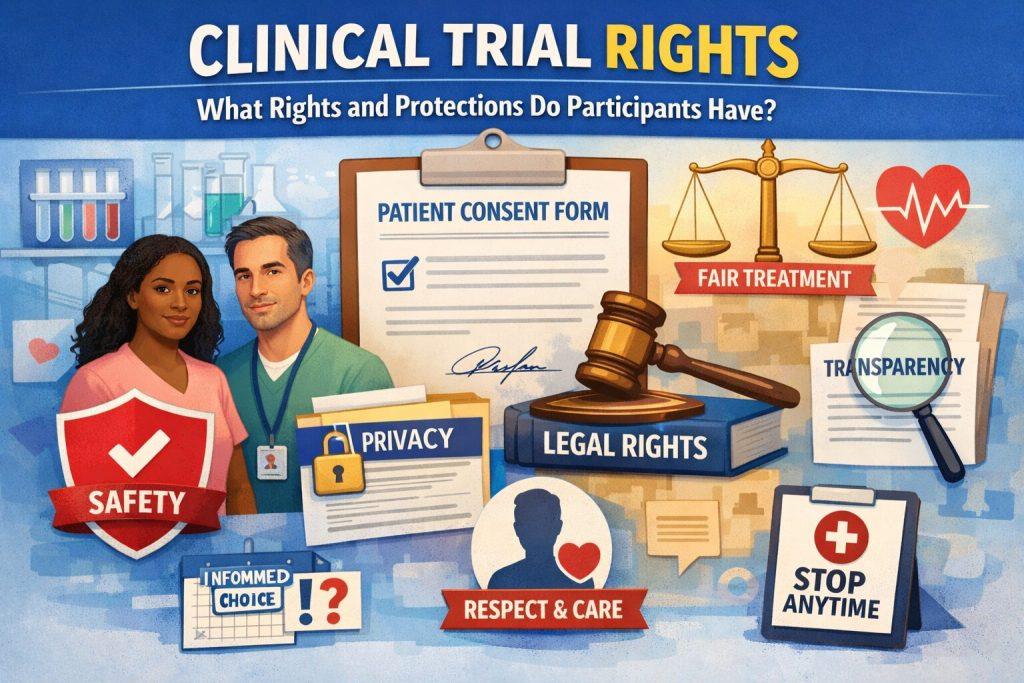
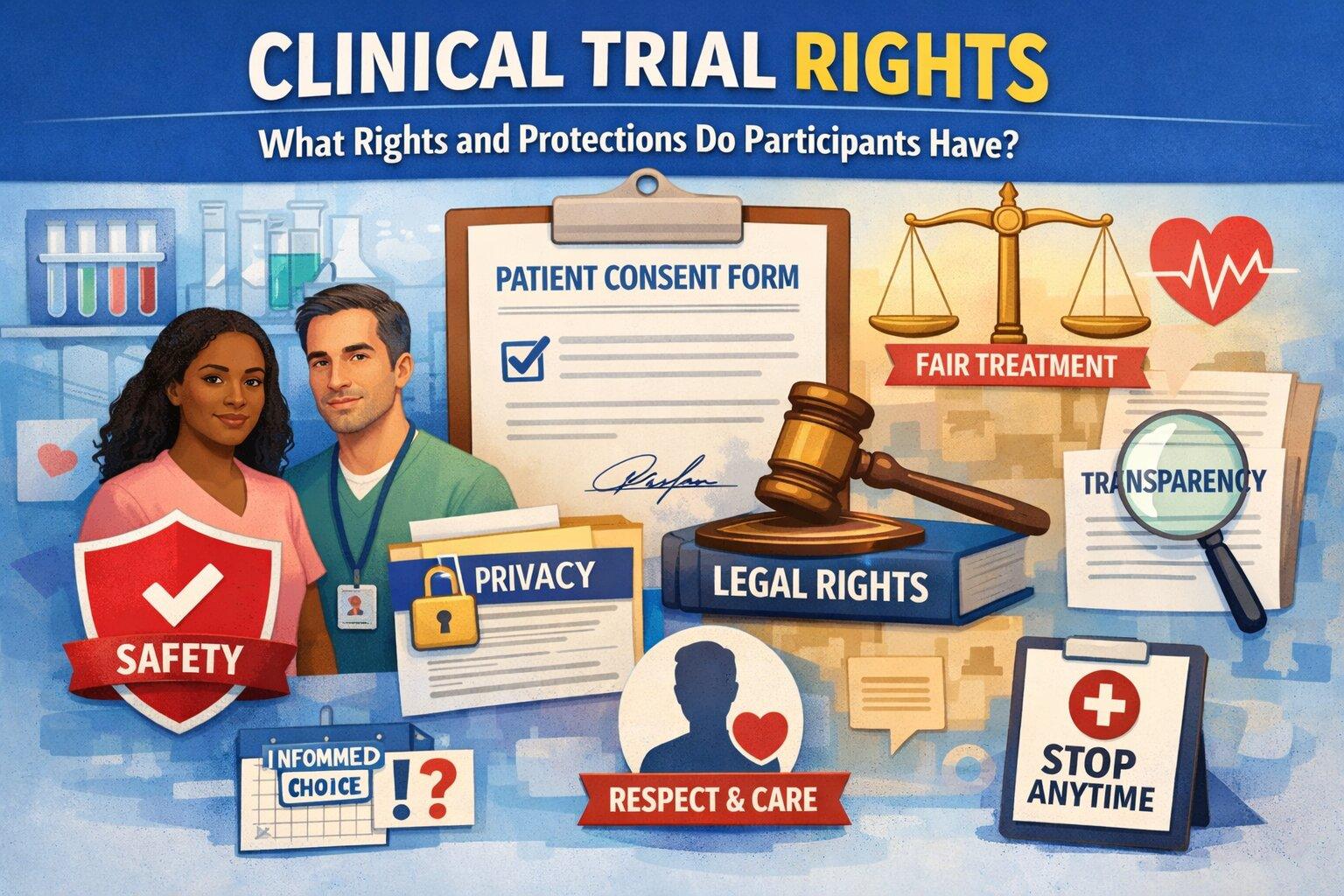
Signing up for a clinical trial is not the same as handing over control of your health to a research team. Participants have a defined set of rights that exist before enrollment begins and stay in place for the entire study. Knowing what those rights are changes how the whole process feels, and it should be part of any conversation about whether to join.
The Right to Full Information Before You Decide
Before a single test is run or a single dose is given, every participant goes through informed consent. This is a formal process, not a checkbox. The research team walks through what the study involves, what is being tested, what risks are currently known, and what alternatives exist outside the trial. All of it has to be delivered in plain language the participant understands.
The consent form captures that conversation in writing, but the form itself is not the point. The process is. A participant who signs without understanding what they agreed to has not given meaningful consent, and researchers are responsible for making sure that does not happen. Questions are expected. Taking time to decide is expected. Pressure to sign quickly is not.
The Right to Leave at Any Time
No participant is locked into a trial once it starts. Withdrawing is always an option, at any point, for any reason or no reason at all. The research team has no authority to require someone to stay, and leaving a study has no effect on the regular medical care that person receives outside of it.
This right exists because the alternative would make participation coercive. People should be in trials because they chose to be there, not because leaving felt complicated or costly. Research teams are required to communicate this right clearly, and it has to be genuine, not buried in paperwork.
The Right to Ongoing Information
Once a trial is underway, the research team has an obligation to share new findings that might affect a participant’s decision to stay enrolled. If a safety concern surfaces mid-study, participants hear about it. If results from a related study shift the picture of what a treatment does, that gets communicated too.
Participants are not passive subjects generating data for someone else to use. They are stakeholders in the research, and keeping them informed is a condition of running the trial, not a courtesy.
Protection Through Independent Review
Every clinical trial in the United States requires approval from an Institutional Review Board (IRB) before it opens to participants. The IRB is not part of the company or institution running the study. It is an independent committee that reviews the research design, evaluates whether the risks are proportionate to the potential benefits, and decides whether the study meets ethical standards.
The IRB continues to oversee the trial once it begins. Researchers cannot make significant changes to the study protocol without going back for review. That ongoing accountability is what gives IRB approval real weight rather than making it a one-time hurdle.
Protection Through Safety Monitoring
Many trials also operate under a Data Safety Monitoring Board (DSMB). This group reviews accumulating safety data on a schedule throughout the trial and has the authority to recommend stopping a study early. That can happen when harm is detected in participants or when results are so clearly positive that withholding the treatment from the control group would be unethical.
The DSMB sits outside the research team and has no stake in whether the trial succeeds. That independence is what makes its recommendations credible. A research sponsor cannot override a DSMB recommendation without going through a formal process.
Federal Protections That Apply to Every Trial
The rights described above are not voluntary commitments from individual research institutions. They are grounded in federal regulation. The Common Rule, formally known as 45 CFR 46, sets baseline standards for human subjects research funded by the federal government. The FDA has its own parallel regulations that apply to trials supporting drug and device approvals.
These rules govern informed consent requirements, IRB review processes, and the conditions under which research may be conducted. Violations carry real consequences, including disqualification of data, loss of federal funding, and in serious cases, criminal penalties.
What to Do If Something Goes Wrong
Participants who believe their rights have been violated have options. Every trial is required to provide contact information for the IRB overseeing the study. The IRB receives and reviews complaints from participants. The FDA’s MedWatch program accepts reports about problems in drug trials. The Office for Human Research Protections (OHRP) handles complaints related to federally funded research.
Knowing these channels exist before joining a trial is useful. A research team that discourages participants from knowing about them is worth paying attention to.
The protections in clinical research did not arrive fully formed. They developed in response to historical cases where participants were harmed by research conducted without adequate oversight. The system in place today reflects that history and treats participant rights as a condition of doing the science, not an obstacle to it.Signing up for a clinical trial is not the same as handing over control of your health to a research team. Participants have a defined set of rights that exist before enrollment begins and stay in place for the entire study. Knowing what those rights are changes how the whole process feels, and it should be part of any conversation about whether to join.
The Right to Full Information Before You Decide
Before a single test is run or a single dose is given, every participant goes through informed consent. This is a formal process, not a checkbox. The research team walks through what the study involves, what is being tested, what risks are currently known, and what alternatives exist outside the trial. All of it has to be delivered in plain language the participant understands.
The consent form captures that conversation in writing, but the form itself is not the point. The process is. A participant who signs without understanding what they agreed to has not given meaningful consent, and researchers are responsible for making sure that does not happen. Questions are expected. Taking time to decide is expected. Pressure to sign quickly is not.
The Right to Leave at Any Time
No participant is locked into a trial once it starts. Withdrawing is always an option, at any point, for any reason or no reason at all. The research team has no authority to require someone to stay, and leaving a study has no effect on the regular medical care that person receives outside of it.
This right exists because the alternative would make participation coercive. People should be in trials because they chose to be there, not because leaving felt complicated or costly. Research teams are required to communicate this right clearly, and it has to be genuine, not buried in paperwork.
The Right to Ongoing Information
Once a trial is underway, the research team has an obligation to share new findings that might affect a participant’s decision to stay enrolled. If a safety concern surfaces mid-study, participants hear about it. If results from a related study shift the picture of what a treatment does, that gets communicated too.
Participants are not passive subjects generating data for someone else to use. They are stakeholders in the research, and keeping them informed is a condition of running the trial, not a courtesy.
Protection Through Independent Review
Every clinical trial in the United States requires approval from an Institutional Review Board (IRB) before it opens to participants. The IRB is not part of the company or institution running the study. It is an independent committee that reviews the research design, evaluates whether the risks are proportionate to the potential benefits, and decides whether the study meets ethical standards.
The IRB continues to oversee the trial once it begins. Researchers cannot make significant changes to the study protocol without going back for review. That ongoing accountability is what gives IRB approval real weight rather than making it a one-time hurdle.
Protection Through Safety Monitoring
Many trials also operate under a Data Safety Monitoring Board (DSMB). This group reviews accumulating safety data on a schedule throughout the trial and has the authority to recommend stopping a study early. That can happen when harm is detected in participants or when results are so clearly positive that withholding the treatment from the control group would be unethical.
The DSMB sits outside the research team and has no stake in whether the trial succeeds. That independence is what makes its recommendations credible. A research sponsor cannot override a DSMB recommendation without going through a formal process.
Federal Protections That Apply to Every Trial
The rights described above are not voluntary commitments from individual research institutions. They are grounded in federal regulation. The Common Rule, formally known as 45 CFR 46, sets baseline standards for human subjects research funded by the federal government. The FDA has its own parallel regulations that apply to trials supporting drug and device approvals.
These rules govern informed consent requirements, IRB review processes, and the conditions under which research may be conducted. Violations carry real consequences, including disqualification of data, loss of federal funding, and in serious cases, criminal penalties.
What to Do If Something Goes Wrong
Participants who believe their rights have been violated have options. Every trial is required to provide contact information for the IRB overseeing the study. The IRB receives and reviews complaints from participants. The FDA’s MedWatch program accepts reports about problems in drug trials. The Office for Human Research Protections (OHRP) handles complaints related to federally funded research.
Knowing these channels exist before joining a trial is useful. A research team that discourages participants from knowing about them is worth paying attention to.
The protections in clinical research did not arrive fully formed. They developed in response to historical cases where participants were harmed by research conducted without adequate oversight. The system in place today reflects that history and treats participant rights as a condition of doing the science, not an obstacle to it.
Leave a Reply